
2026-10-06 · Carlos Mendoza
When a Plunge Stops Working on Tampa Shower Drains
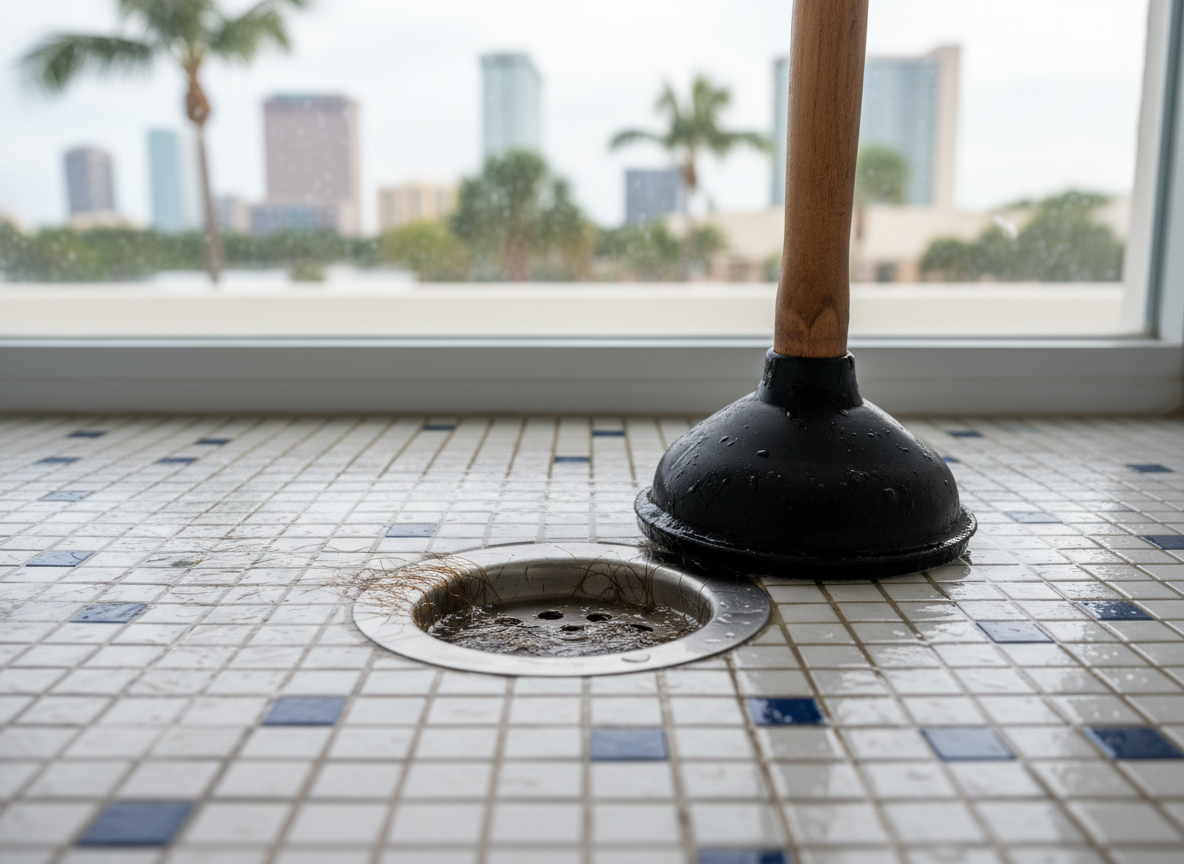
When plunging stops clearing a Tampa shower drain, the clog has usually moved past the P-trap into the branch line or main, where suction alone cannot reach it. In 33611 neighborhoods, this often happens because hair and soap scum combine with the sandy soil that shifts around older cast-iron or PVC lines, creating blockages that sit 10–20 feet downstream. Homeowners in Palma Ceia and Bayshore see the same pattern after heavy summer rains push debris deeper into the system.
Why Plunging Loses Effectiveness in 33611 Shower Lines
Shower drains in Tampa 33611 homes built before 1980 frequently contain 1.5-inch or 2-inch pipes that collect layered buildup over time. A plunger only agitates the water column in the trap, so once material packs farther down the run, repeated plunging simply creates air gaps without moving the mass. Local conditions like high humidity and frequent thunderstorms accelerate the problem by sending extra water volume that compacts the clog rather than flushing it. Tree roots from nearby palms and oaks also enter joints in Ballast Point and surrounding streets, turning a simple hair clog into a root-reinforced plug that plunging cannot break.
Next Steps After the Plunger Fails
Start by removing the drain cover and using a zip tool or manual auger to reach 3–6 feet into the trap arm. If resistance remains beyond that distance, the blockage sits in the branch line or stack. At that point, drain snaking reaches the obstruction without the risk of cracking older pipes that plunging can stress. For recurring issues in 33611 properties, a drain camera inspection shows exactly where the line narrows or where roots intrude, preventing repeated failed attempts with a plunger.
When to Call for Hydro Jetting or Snaking
Persistent backup after plunging usually signals a clog 8–15 feet from the shower that needs mechanical or water-pressure clearing. In West Tampa and Riverview homes with clay or cast-iron laterals, hydro jetting scours the pipe walls at 3,500–4,000 psi to remove the layered soap and sand that hand tools miss. Homeowners notice the difference when multiple fixtures slow at once, indicating the problem has reached the main rather than staying isolated to one shower. Recurring drain clogs in these neighborhoods almost always trace back to the same pipe sections that plunging cannot access.
Local Factors That Change the Job in Tampa 33611
Sandy soil in the 33611 zip code shifts during rainy season, allowing small roots to enter joints that older homes never had properly sealed. This turns a shower clog into a larger issue faster than in newer subdivisions. Properties near Bayshore and Palma Ceia also sit on flatter grades, so wastewater moves slower and lets sediment settle. Factors affecting drain cleaning time in older Tampa properties include these exact pipe materials and soil conditions that determine whether snaking finishes in one visit or requires follow-up jetting.
Once plunging no longer restores flow, the practical next move is professional equipment sized for the line diameter found in 33611 homes. Addressing the clog at the correct depth prevents water from backing into the tub or leaking at joints during the next heavy rain.